Zucchini Soup used to be one of those recipes I made only when the garden left me with more zucchini than I knew what to do with. You know that moment, right? A few zucchini are sitting in the fridge, and you keep thinking, “I really need to use those today.” That was usually my cue to pull out the soup pot.
The first time I blended zucchini with potatoes, garlic, onion, and a well-seasoned broth, I expected something light but fairly ordinary. Instead, the potatoes gave the soup this naturally creamy texture that surprised me. I remember tasting a spoonful and thinking, “Wait, does this even need cream?”
That is still what I like most about this recipe. You can keep your Zucchini Soup healthy and light or stir in a little cream and cheese for extra richness. Either way, it turns simple vegetables into a warm, smooth bowl that feels far more comforting than the ingredient list suggests.
Table of Contents
Zucchini Soup Ingredients for a Creamy, Flavorful Bowl
One thing I’ve learned from making Zucchini Soup is that a short ingredient list leaves very little room for bland ingredients to hide. Zucchini itself is mild, which is both the good news and the problem. It happily takes on garlic, herbs, broth, and cheese, but without enough seasoning, the finished soup can taste a little flat. I’ve had that bowl before. You take the first spoonful, pause, then immediately reach for the salt.
For this recipe, you’ll need:
- Zucchini, cut into chunks
- Russet potatoes, peeled and diced
- Yellow onion
- Fresh garlic
- Butter
- Chicken broth
- Soy sauce or Worcestershire sauce
- Dried rosemary and thyme
- Celery salt, salt, and black pepper
- A small pinch of cayenne, if desired
- Half-and-half or heavy cream, optional
- Freshly shredded cheddar cheese, optional
Why Potatoes Make Zucchini Soup Naturally Creamy
The potatoes are probably my favorite little trick here. In a Zucchini Potato Soup, they do more than make the meal filling. Once they become completely tender and are blended with the zucchini and broth, their starch gives the soup body and a velvety texture.
That means you can make a surprisingly Creamy Zucchini Soup without pouring in lots of heavy cream. Actually, I’d taste it before adding any dairy. You may find that it is already creamy enough.
If you want something richer and closer to a traditional Cream of Zucchini Soup, add half-and-half and shredded cheese after blending. Add them gently over low heat so the soup stays smooth.
Should You Peel Zucchini for Soup?
Usually, no. For ordinary small or medium zucchini, I leave the skin on. It saves time, adds color, and becomes almost unnoticeable once everything is blended.
There is one exception. If you’re using a huge garden zucchini that has been sitting around long enough to develop thick, tough skin, peeling it can give your Zucchini Soup a smoother texture and milder flavor. Large zucchini can also contain mature seeds, so I sometimes scoop those out before chopping.
And if you know zucchini as courgette, nothing changes. Zucchini and courgette are simply different names for the same vegetable, so you can follow the recipe exactly as written.
What Makes Zucchini Soup Taste Better?
Zucchini Soup tastes better when its mild zucchini base is balanced with aromatics, herbs, enough salt, and a savory ingredient such as broth or a small amount of soy sauce. Potatoes provide creaminess, while optional cheese and cream make the flavor richer.
The soy sauce might sound strange here. I thought so too the first time I saw it used in a vegetable soup. But the goal isn’t to make the soup taste like soy sauce. A small amount simply adds savory depth, especially when the zucchini itself is particularly mild.
How to Make Zucchini Soup with Potatoes
Making Zucchini Soup is fairly forgiving, but there is one temptation worth resisting: throwing everything into the pot at once. I’ve done it when I was short on time, and yes, you still get soup. But giving the onion, garlic, and zucchini a few minutes to cook before adding the broth creates a noticeably deeper flavor.
Start by melting the butter in a soup pot over medium heat. Add the diced onion and let it soften for about 5 minutes. Stir in the garlic, zucchini, rosemary, thyme, celery salt, pepper, salt, and a tiny pinch of cayenne if you like a little warmth. Cook for another 5 minutes, stirring occasionally.
At this stage, don’t worry if the zucchini releases some moisture. That is completely normal.
Step-by-Step Zucchini Potato Soup Method
- Prepare the potatoes. Peel the russet potatoes and cut them into small, fairly even pieces. Smaller chunks cook faster and make it easier to judge when everything is ready for blending.
- Add the liquid. Pour the chicken broth into the pot, then add the potatoes and a small amount of soy sauce or Worcestershire sauce.
- Bring it to a boil. Once bubbling, reduce the heat to a gentle simmer.
- Cook until very tender. Partially cover the pot and simmer for about 20 minutes. Don’t stop when the potatoes are merely cooked enough to eat. For smooth Zucchini Potato Soup, you want both the potatoes and zucchini very soft.
- Blend the soup. Remove the pot from the heat and blend with an immersion blender until creamy. If you’re using a countertop blender, work carefully in batches rather than filling it completely with hot soup.
- Finish with optional dairy. Return the soup to low heat and stir in half-and-half if you want extra richness. Add freshly shredded cheddar gradually, stirring until smooth.

How to Blend Zucchini Soup Until Smooth
An immersion blender is convenient because everything stays in one pot, but a regular blender can produce an especially silky texture. Either works. The important part is allowing the vegetables to become genuinely soft first. Trying to blend undercooked potatoes is usually where that slightly grainy texture starts.
And here’s something I wouldn’t rush: taste your Zucchini Soup before adding cream or cheese. Potatoes naturally thicken the broth, so you might take a spoonful and realize it already has the consistency you wanted.
Tips for Creamy Zucchini Soup Every Time
A good Zucchini Soup should feel creamy on the spoon without becoming so thick that you forget you’re eating soup. That balance sounds simple until you make a batch that’s watery one day and almost mashed potatoes the next. I’ve landed on both sides of that problem. Usually, the culprit isn’t the zucchini itself. It’s the relationship between the vegetables, broth, cooking time, and whatever dairy you decide to add at the end.
One thing worth remembering is that zucchini contains plenty of water. If you’re using large garden zucchini, the soup may naturally be a little looser. So don’t automatically pour in every drop of broth at the beginning. Holding back a small amount gives you more control. You can always add broth later. Taking it back out? Well, that’s considerably more annoying.
How to Keep Zucchini Soup from Getting Watery
For a thicker Creamy Zucchini Soup, use russet potatoes and cook them until they are extremely tender. Their starch helps bind the blended vegetables and broth together without needing flour or cornstarch.
A few small details make a surprisingly big difference:
- Cut potatoes into similar-sized pieces so they soften evenly.
- Sauté the zucchini before adding broth to develop more flavor.
- Add broth conservatively if your zucchini seems particularly watery.
- Simmer uncovered for a few minutes if the blended soup is too thin.
- Add cream only after checking the consistency.
- Use freshly grated cheese rather than pre-shredded cheese for smoother melting.
Here’s the part I used to get backward: more cream doesn’t necessarily mean better Cream of Zucchini Soup. Cream adds richness, certainly, but potatoes are doing most of the important texture work here. Too much dairy can actually cover the fresh zucchini flavor you’re trying to keep.
Getting the Cheese and Cream Right
If you’re adding half-and-half or heavy cream, lower the heat first. The soup doesn’t need an aggressive boil once dairy enters the pot. Stir it in gently, taste, and then decide whether you actually want more.
Cheese needs similar treatment. I prefer shredding cheddar directly from a block and adding it gradually over low heat. Dumping cold cheese into fiercely boiling soup can leave you wondering why your beautifully smooth Zucchini Potato Soup suddenly looks grainy.
Sharp cheddar gives the soup a stronger savory finish, but Parmesan or Gouda can work too. And sometimes I skip cheese entirely. It depends on what I’m serving alongside it and, frankly, what happens to be in the refrigerator.
Why Does My Zucchini Soup Taste Bland?
Zucchini Soup can taste bland because zucchini has a naturally mild flavor and needs enough salt, aromatics, herbs, and savory depth. Onion, fresh garlic, seasoned broth, rosemary, thyme, and a small amount of soy sauce or Worcestershire sauce help build a fuller flavor.
Taste again after blending. This matters more than it sounds. Blending changes how the ingredients come together, so seasoning that seemed fine before may suddenly feel muted. Add salt or pepper gradually, tasting between additions.
And if the soup still feels like it’s missing something? Before reaching for more cream, try a little extra seasoning. Quite often, richness isn’t what the bowl needs at all. It just needs its flavors brought into focus.
Healthy Zucchini Soup Variations Worth Trying
One reason Zucchini Soup stays in my regular rotation is that it doesn’t lock you into one version. Some evenings I want the cheddar, cream, and everything that makes the bowl feel extra cozy. Other days, especially when the weather is warmer, that sounds heavier than what I’m craving. So I make essentially the same soup but let the zucchini, potatoes, garlic, and herbs carry most of the flavor.
For a lighter version, simply leave out the cream and cheese. The potatoes still give the blended soup a smooth consistency, which is why this recipe doesn’t suddenly become thin and disappointing when the dairy disappears. You can also use vegetable broth instead of chicken broth. Taste carefully toward the end, though. Different broths vary quite a bit in saltiness and flavor.
These small changes make it easy to explore healthy zucchini soup ideas without reinventing the entire recipe every time.
Zucchini Basil Soup for a Fresher Flavor
If you’ve ever smelled fresh basil next to freshly cut zucchini, you can probably guess why these two work together. Basil gives the mild vegetable a brighter, almost summery personality.
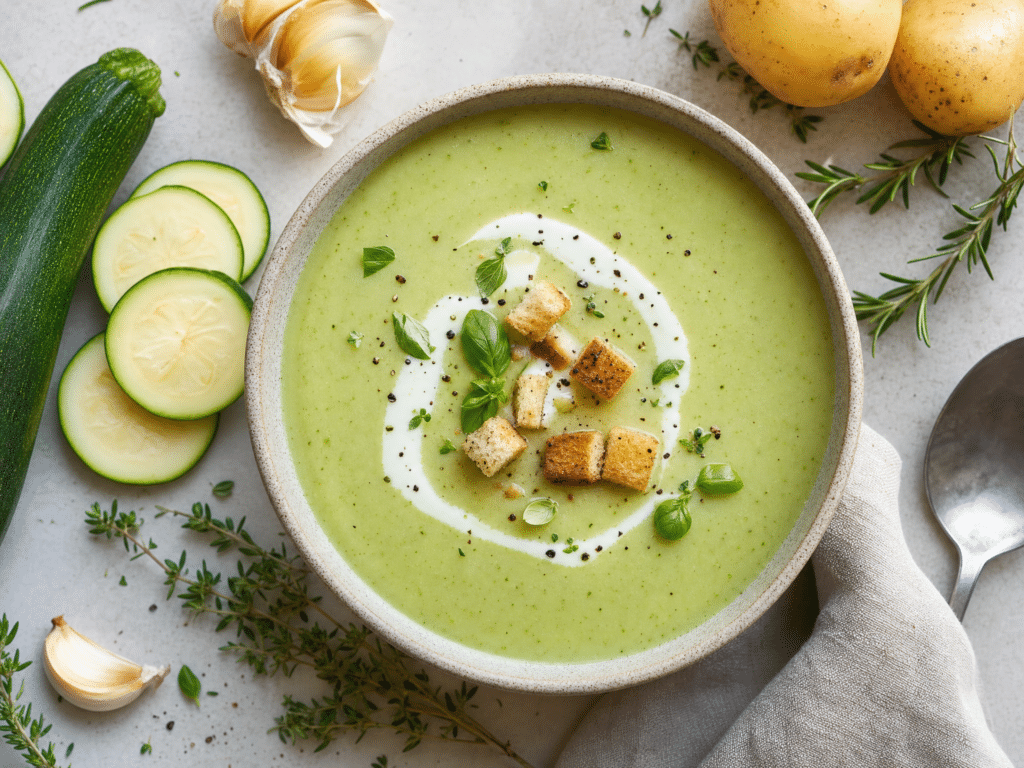
To make Zucchini Basil Soup, prepare the recipe normally but blend in a handful of fresh basil near the end. I wouldn’t simmer the basil for the full cooking time. Fresh basil loses some of that lively flavor when cooked too long, and that’s exactly the flavor we’re trying to capture.
Start with a modest amount, blend, then taste. You can always add another few leaves.
For an even fresher finish, consider:
- Freshly cracked black pepper
- A small squeeze of lemon
- Chopped basil on top
- A light drizzle of olive oil
- Homemade croutons for crunch
I like this variation without cheddar because the basil becomes much easier to notice. Still, that’s preference rather than a rule.
Dairy-Free and Vegetarian Zucchini Soup
For dairy-free Zucchini Soup, replace the butter with olive oil and skip the half-and-half and cheese. Since potatoes already provide much of the creamy body, you don’t necessarily need a dairy substitute.
Want it richer? A modest splash of unsweetened plant-based cream can work, but check the flavor first. Some alternatives have a noticeable sweetness, which isn’t exactly what you want to discover after pouring half the carton into your soup.
For a vegetarian version, the adjustment is even simpler. Use a flavorful vegetable broth instead of chicken broth. If using Worcestershire sauce, check the label because traditional versions commonly contain anchovies. Soy sauce is the easier vegetarian option here.

Zucchini Soup Recipe: Creamy, Easy and Delicious

Ingredients
- 2 tablespoons butter
- 1 small yellow onion diced
- 2 cloves garlic minced
- 5 cups zucchini cut into chunks
- 2 russet potatoes about 1 pound total, peeled and chopped
- 3 cups chicken broth
- 1 teaspoon soy sauce or Worcestershire sauce
- 1/4 teaspoon dried rosemary
- 1/4 teaspoon dried thyme
- 1/4 teaspoon celery salt
- Salt and black pepper to taste
- 1 pinch cayenne pepper optional
- 1/2 cup half-and-half or heavy cream optional
- 1 cup shredded cheddar cheese optional
Instructions
- Melt the butter in a large soup pot over medium heat. Add the diced onion and cook until softened. Stir in the garlic and cook briefly until fragrant.
- Add the zucchini, rosemary, thyme, celery salt, black pepper, salt, and optional cayenne. Cook for about 5 minutes, stirring occasionally.
- Pour in the chicken broth and soy sauce or Worcestershire sauce. Add the chopped potatoes and stir everything together.
- Bring the soup to a boil, then reduce the heat to a gentle simmer. Cook for about 20 minutes, or until the potatoes and zucchini are very tender.
- Remove the pot from the heat. Carefully blend the soup with an immersion blender until smooth and creamy.
- For a richer Creamy Zucchini Soup, reduce the heat to low and stir in the half-and-half or heavy cream.
- Add the shredded cheddar gradually and stir until completely melted. Avoid boiling the soup after adding the dairy.
- Taste and adjust the salt, pepper, or other seasonings as needed. Serve warm with croutons, crusty bread, fresh herbs, or a sprinkle of cheese.
Notes
Zucchini Soup Substitutions and Easy Variations
I’ve rarely made Zucchini Soup exactly the same way twice. Not because the basic recipe needs fixing, but because soup is wonderfully forgiving when the refrigerator isn’t cooperating. Maybe you’re out of chicken broth. Maybe the cheddar disappeared into yesterday’s sandwiches. Or perhaps you simply want something lighter tonight. Most of those changes are easy to handle as long as you understand what each ingredient is doing.
The potatoes, for example, aren’t there just to bulk things up. They help create that creamy texture after blending. The broth controls both flavor and consistency, while cream and cheese are more about richness than structure. Once you know that, substitutions become much less intimidating.
Easy Ingredient Swaps for Zucchini Soup
Here are the substitutions I find most useful:
- Chicken broth: Replace it with vegetable broth for a vegetarian Zucchini Soup. Choose one with a flavor you actually enjoy because it becomes part of the soup’s base.
- Russet potatoes: Yukon Gold potatoes work well and can give the soup a slightly buttery character. The final texture may differ a little, but not enough to worry about.
- Butter: Olive oil is an easy swap, particularly for a dairy-free version.
- Half-and-half: Heavy cream creates a richer finish. For something lighter, skip the dairy completely and let the blended potatoes provide the creaminess.
- Cheddar: Parmesan brings a saltier, sharper flavor, while Gouda makes the soup richer and slightly more mellow.
- Soy sauce: Worcestershire sauce can add similar savory depth, although traditional Worcestershire isn’t suitable for every vegetarian diet.
- Dried herbs: Fresh thyme or rosemary can be used, but start cautiously. Fresh herbs can become surprisingly assertive in a mild vegetable soup.
One warning from experience: change one or two major ingredients at a time. If you swap the broth, potato, herbs, dairy, and cheese all at once, you’re technically still making soup, but troubleshooting the flavor becomes a guessing game.

Can You Make Zucchini Soup Without Potatoes?
Yes, you can make Zucchini Soup without potatoes, but the texture will be thinner because potatoes provide much of the natural thickness in this recipe.
If you leave them out, reduce the broth slightly at first. Blend the cooked zucchini, then add more broth until the consistency feels right. Cream can add richness, but it doesn’t behave exactly like blended potato, so don’t expect precisely the same body.
You could also simply embrace the lighter texture. Not every Creamy Zucchini Soup needs to be spoon-standing thick. Sometimes a smoother, lighter bowl is exactly what works.
Turning the Basic Recipe Into Your Own
This is where I think zucchini’s mildness becomes an advantage rather than a weakness. Once the basic soup is balanced, you have room to experiment.
Fresh basil gives it a summery direction. Parmesan pushes it toward a sharper, savory profile. A pinch of cayenne adds background warmth without turning the recipe spicy. You could even leave the soup slightly less blended if you prefer some vegetable texture.
But I’d resist turning it into Zucchini Stew or Vegetable Noodle Soup just to accommodate another variation. Those are different dishes with different expectations. A good Zucchini Soup doesn’t need to be everything at once.
What Can I Add to Zucchini Soup for More Flavor?
To give Zucchini Soup more flavor, add well-cooked onion and garlic, herbs such as thyme or rosemary, a savory ingredient such as soy sauce, and enough salt to bring the mild zucchini forward. Fresh basil, Parmesan, black pepper, or a small squeeze of lemon can also change the final flavor without overwhelming the soup.
My rule is simple: taste first, add second. It’s tempting to throw another handful of cheese into a soup that seems flat, but sometimes all it needs is salt, pepper, or a brighter finishing note. That’s a much easier adjustment, and quite often, a better one.
What to Serve with Zucchini Soup
A bowl of Zucchini Soup can go in two completely different directions. Keep the portion small and it works beautifully as a starter, or add something substantial on the side and suddenly you’ve got dinner. I usually make that decision after tasting the finished soup. If I’ve added cheddar and cream, I tend to keep the sides simple. When I make the lighter version, though, I’m much more tempted by warm bread or a toasted sandwich.
And yes, dipping bread into the last bit of creamy soup at the bottom of the bowl might be half the reason I make it.
The trick is choosing something that adds contrast. Creamy Zucchini Soup is smooth and mild, so crunchy, toasted, fresh, or slightly tangy sides tend to make the whole meal more interesting.
Easy Sides for Creamy Zucchini Soup
If you’re serving this Zucchini Potato Soup for lunch or dinner, these pairings work particularly well:
- Crusty bread or a warm baguette
- Garlic bread
- Homemade croutons
- Grilled cheese sandwiches
- Turkey or chicken sandwiches
- A simple green salad
- Tomato and cucumber salad
- Roasted vegetables
- Crackers with a little Parmesan
- Grilled or roasted chicken for extra protein
My easiest option is croutons. That crisp bite against the smooth soup makes a bigger difference than you’d expect. If the soup already contains plenty of cheese, I usually choose plain or herb-seasoned croutons rather than adding another heavy topping.
For a lighter meal, a fresh salad is probably my favorite pairing. Something with lemon or a mildly acidic vinaigrette cuts through the creamy texture and keeps the meal from feeling too rich.
Turning Zucchini Soup Into a Complete Meal
If you’re making Zucchini Soup healthy and light, skipping cream and cheese can leave room for a more substantial side. Add grilled chicken, a bean salad, or a hearty sandwich and the soup becomes part of a fuller meal without feeling excessive.
On colder evenings, I do almost the opposite. I’ll make the soup richer, add cheddar, scatter croutons over the top, and serve bread alongside it. Is that the lightest dinner imaginable? No. But sometimes you’re looking for comfort rather than optimization.
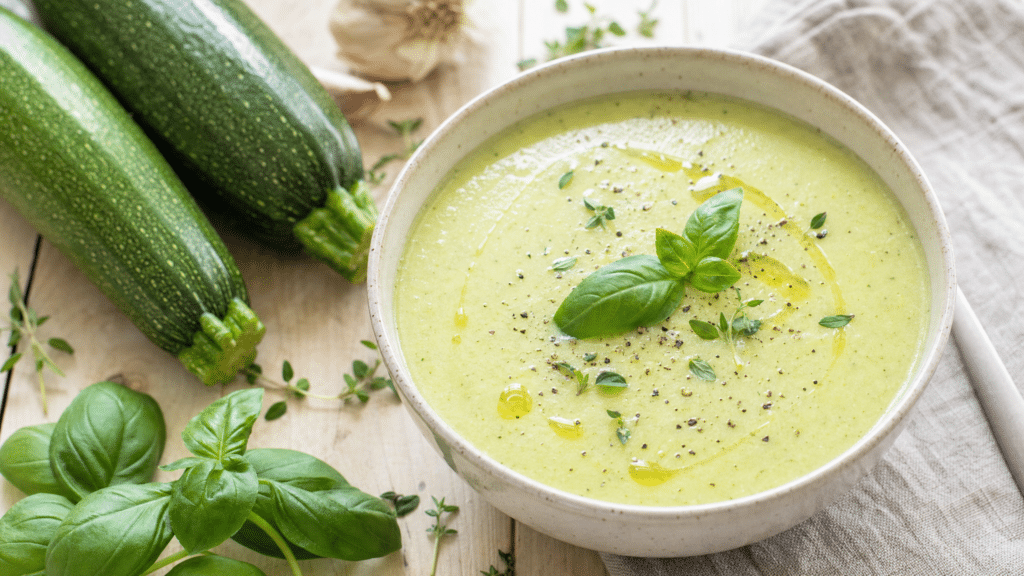
Toppings can also change the bowl without changing the recipe itself. Try chopped basil, cracked black pepper, grated Parmesan, croutons, or a small drizzle of olive oil. Just don’t pile everything on at once. Zucchini has a delicate flavor, and it’s surprisingly easy to bury it.
How to Store and Freeze Zucchini Soup
One of the practical reasons I make a full pot of Zucchini Soup instead of cutting the recipe in half is that the leftovers are genuinely useful. There is something satisfying about opening the refrigerator the next day and realizing lunch is already handled. Better yet, the flavors have had time to settle together, so I sometimes think the soup tastes even more balanced after a night in the fridge.
Storage is simple, but I wouldn’t put a steaming pot straight into the refrigerator. Let the soup cool first, then transfer it to an airtight container. The original recipe recommends refrigerating it for up to 3 days or freezing it for up to 3 months.
If you’ve added cream or cheese, don’t be surprised if the soup becomes noticeably thicker when chilled. That’s normal. Potatoes, dairy, and the blended vegetables all contribute to that change in texture.
Can You Freeze Cream of Zucchini Soup?
Yes, Zucchini Soup can be frozen for up to 3 months according to the source recipe, which specifically notes that the soup freezes and reheats well.
I prefer freezing it in individual portions rather than one enormous container. It makes those “I need lunch in ten minutes” days much easier, and you only thaw what you actually plan to eat.
For freezing:
- Allow the soup to cool before packing it.
- Transfer it to freezer-safe airtight containers.
- Leave a little room at the top for expansion.
- Divide it into individual portions when convenient.
- Label the container with the date.
- Freeze for up to 3 months.
If I know in advance that most of the batch is going into the freezer, I sometimes prefer freezing the soup before adding the optional dairy and cheese. Then I can reheat the base and add those ingredients fresh. It isn’t essential, but it gives you more control over the final consistency.
How to Reheat Zucchini Soup Without Losing the Creamy Texture
Reheat Creamy Zucchini Soup gently on the stovetop over low to medium-low heat, stirring occasionally. If it has thickened considerably in the refrigerator, add a small splash of broth and stir before deciding whether it needs more.
This is one of those moments where adding liquid slowly really matters. Pour in too much broth and the creamy soup you carefully made yesterday can suddenly become frustratingly thin.
If the soup contains dairy or cheese, avoid aggressively boiling it. Gentle heat helps preserve the smoother consistency. After freezing, you may notice a little separation as the soup warms. Stir it thoroughly before assuming something has gone wrong.
How Long Does Zucchini Soup Last in the Fridge?
According to the source recipe, Zucchini Soup can be stored in an airtight container in the refrigerator for up to 3 days. For longer storage, the recipe recommends freezing it for up to 3 months.
When reheating leftovers, check the consistency as well as the flavor. A spoonful of broth can loosen an overly thick Zucchini Potato Soup, while a little extra seasoning may wake the flavors back up.

And that’s the nice thing about having this soup waiting in the fridge. The hard part is already finished. Warm it slowly, make one or two tiny adjustments, grab some bread if you have it, and lunch is basically done.
Final Thoughts on This Zucchini Soup
Zucchini Soup is one of those recipes that reminds me how little you sometimes need to make something genuinely comforting. A few zucchini, potatoes, garlic, onion, broth, and seasonings come together in a way that feels surprisingly rich once everything is blended. And after making it a few times, you start realizing how easily the recipe can bend around what you have in the kitchen.
Keep it simple and dairy-free when you want a lighter bowl. Add cream and cheddar when you’re craving something warmer and richer. Fresh basil can brighten it up, while crusty bread or homemade croutons can turn it into a satisfying meal.
More than anything, don’t be afraid to taste and adjust as you cook. That’s usually where a good soup becomes your soup. So the next time a few zucchini are waiting in the fridge, this Zucchini Soup might be exactly where they belong.
Frequently Asked Questions About Zucchini Soup
Even though Zucchini Soup is fairly straightforward, a few questions tend to come up once you actually stand in the kitchen with zucchini, potatoes, and a soup pot in front of you. Should you peel the zucchini? Is cream really necessary? And what happens if you don’t have potatoes?
I’ve wondered about most of these myself, especially when working with oversized garden zucchini. So, rather than burying the answers inside the recipe, here are the practical details worth knowing before you start changing things.
1.Can I Make Zucchini Soup Without Cream?
Absolutely. In fact, cream is optional in the source recipe. The potatoes soften during cooking and are blended with the zucchini and broth, creating much of the creamy consistency naturally.
I’d actually recommend tasting the soup before adding dairy. You might decide it doesn’t need anything else. If you want a richer Creamy Zucchini Soup, stir in half-and-half or heavy cream toward the end.
2.Can I Make Zucchini Soup Without Potatoes?
Yes, although the result will be lighter and thinner. Potatoes are the primary natural thickener in this particular Zucchini Soup recipe.
If you’re leaving them out, begin with less broth and adjust the consistency after blending. That’s easier than starting with too much liquid and spending the next twenty minutes trying to reduce it.
3.How Do You Keep Zucchini Soup From Getting Watery?
Use enough potato relative to the broth, and remember that zucchini releases water while cooking. If the finished soup seems thin, simmer it gently without the lid so some of the excess liquid evaporates.
For future batches, hold back a little broth at the beginning. Once the vegetables are blended, you can add more until the soup reaches the consistency you prefer.
4.Is Zucchini Soup Healthy?
Zucchini itself can fit naturally into a balanced vegetable-based meal, but whether a particular Zucchini Soup is healthy depends on the complete recipe, serving size, broth, dairy, cheese, and individual dietary needs.
This recipe is particularly flexible because the cream and cheese are optional. If you’re looking for healthy zucchini soup ideas, you can leave out the dairy, use vegetable broth, and rely on blended potatoes for a creamy texture.
That flexibility is probably more useful than simply calling one version “healthy.” You can keep the bowl light, make it richer, or land somewhere between the two depending on what you actually want from the meal.
5.What Herbs Go Best With Zucchini Soup?
Thyme and rosemary work particularly well with the mild flavor of zucchini and are used in the source recipe. Fresh basil is another option when you want a brighter, fresher Zucchini Basil Soup variation.
Parsley can also work as a simple garnish. Whatever herb you choose, I wouldn’t use too many at once. Zucchini isn’t particularly assertive, and a heavy hand with herbs can quickly become the only thing you taste.